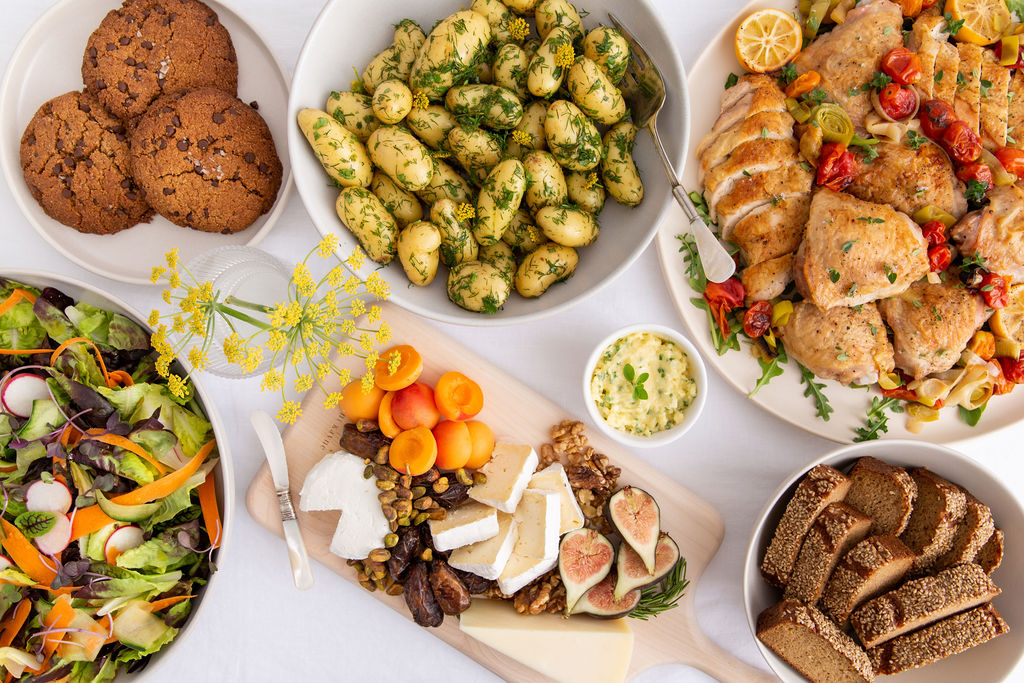
Yes, truly healthy delivered meals are possible, but not every option available today meets that standard.
With increasingly busy lifestyles, many people rely on meal delivery services to save time and simplify daily routines. Ordering food has become a regular part of life, especially for those balancing work, family, and personal commitments. However, this convenience often raises an important question: are these meals actually supporting long-term health, or are they simply quick solutions?
The challenge lies in the growing confusion around what “healthy” really means. Many services use the term freely, yet the actual quality of ingredients, preparation methods, and nutritional balance can vary widely.
At Cooking with Claudine, we believe it is important to look beyond labels and understand what truly defines a healthy meal. In this blog, we take a closer look at the realities of healthy meal delivery, break down common misconceptions, and help you identify what to look for when choosing meals that are both convenient and genuinely nourishing.
What Does “Healthy” Really Mean in Delivered Meals?
The term healthy is used so frequently that it begins to lose its meaning. The number of calories in a meal should not be the only consideration when it comes to food delivery. A meal can be low-calorie. Even so, you may feel dissatisfied or exhausted.
On the other hand, a properly balanced meal may have a combination of proteins, carbohydrates, and fats that will help you get through the day. So, when we talk about a meal delivery meal, we’re really talking about a few key components working together. Ingredients should be full and identifiable, not substantially altered or unnecessarily processed. The meal should feel complete rather than incomplete, and it should still be tasty.
Freshness also plays a role. When food is made closer to the time it is eaten, it naturally keeps more of its value. It also tastes better, which makes it easier to eat healthy over time. At the time, the quality of the ingredients matters just as much as balance. Where the food comes from and how it is handled both play a role in the final quality of the meal. This is where some healthy meal delivery services start to separate themselves from others.
Common Misconceptions About Delivered Meals
- All Delivered Meals Are Processed
This is probably the most common assumption, and to be fair, it didn’t come from nowhere. For a long time, delivered meals were mostly frozen, pre-packaged, and designed to last as long as possible.
But that’s not the only model anymore.
There’s a growing shift toward freshly prepared meals that are made in smaller batches and delivered within a shorter timeframe. These meals don’t go through the same level of processing, which makes a noticeable difference in both taste and quality. So while some delivered meals are still heavily processed, it’s not accurate to place all of them in the same category.
- Healthy Means Bland or Restrictive
Another often held belief is that nutritious food is less pleasurable. People frequently equate it with simple ingredients, little variety, or meals that feel more like a necessity than something to look forward to.
In reality, when ingredients are fresh and consumed at the appropriate moment, they do not require much to taste nice. A well-prepared dinner with seasonal food can be significantly more satisfying than something excessively seasoned or overly rich. Healthy does not have to be dull; it simply means shifting the focus from excess to balance.
- Convenience Always Reduces Quality
There’s also a long-standing belief that convenience and quality can’t really exist together. That if something is easy, it must be cutting corners somewhere. That used to be true more often than not. But it’s changing.
Today, some healthy meal delivery services are designed specifically to solve that problem. They focus on maintaining quality while still making meals easy to access. It doesn’t happen automatically; it requires more attention to sourcing, preparation, and timing, but it is possible.
What Makes a Delivered Meal Truly Healthy?
- Ingredient Quality
Everything begins with the ingredients. If the foundation components of a meal are of poor quality, the end effect will be less than healthful. Fresh veggies, complete grains, and responsibly sourced proteins inherently have higher nutritional value. They also offer a better texture and flavor, requiring fewer additional ingredients later on.
- Cooking Methods
Food preparation is just as important as the ingredients. Even good ingredients might lose their worth if they are overly processed or prepared in a way that depletes them of nutrients. Simpler cooking methods are frequently the most effective. They retain more of what made the ingredient valuable in the first place.
- Nutritional Balance
A healthy meal should feel complete, not extreme. It shouldn’t rely on cutting out entire food groups or overloading one particular component. Balance is what allows a meal to support energy levels and overall well-being without feeling restrictive.
- Transparency
People frequently underestimate the importance of trust. When a healthy meal delivery service is transparent about its products and processes, it is easier to make informed decisions. When that information is unclear or missing, it raises concerns about what is actually being offered.
- Freshness and Timing
There is a visible difference between a freshly prepared dinner and one that has been sitting for several days. Shorter preparation and delivery times help to maintain flavor and nutritional content. This is one of the areas where smaller businesses frequently have an advantage.
Types of Delivered Meals and Their Health Impact
- Fast Food Delivery
Fast food delivery is based on speed and consistency. While it meets the urgent need for convenience, it often contains more sodium, bad fats, and processed ingredients.
- Meal Kits
Meal kits take a different approach by providing ingredients that still need to be cooked. This offers more control, but it also requires time and effort that not everyone has on a daily basis.
- Ready-to-Eat Healthy Meal Services
These services aim to reduce effort without sacrificing quality. When done properly, they offer balanced meals that are already prepared and easy to incorporate into a routine.
- Farm to Table Meal Delivery
This is where things become more refined. Farm to table meal delivery focuses on fresh, seasonal ingredients and shorter supply chains. Because of that, meals tend to retain more of their original quality. This approach aligns closely with what most people are looking for when they search for healthy meal delivery.
Challenges in Maintaining Healthy Delivered Meals
Making meal delivery consistently is not as simple as it sounds. One of the challenges is balancing freshness with shelf life. Extending shelf life often means adding steps that can reduce quality.
Cost is another factor. High-quality ingredients and careful preparation require resources, which makes it harder to keep prices low.
Then, there is the challenge of scale. As demand increases, maintaining the level of consistency becomes more difficult. This is why smaller controlled systems often produce better results.
How to Identify Truly Healthy Meal Delivery Options
Choosing the meal delivery service is not always straightforward, but there are a few things that tend to stand out. If a service clearly explains where its ingredients come from and how meals are prepared, it usually reflects a level of care.
Menus that change with the seasons are another sign. They suggest that the meals are based on availability rather than convenience alone. It also helps to pay attention to how the meals feel overall. Do they seem balanced? Do they rely heavily on sauces or additives? Small details like these can say a lot about the quality.
The Role of Farm-Fresh, Chef-Prepared Meals
Farm-fresh, chef-prepared meals typically offer everything in a more thoughtful manner. When meals are prepared with ingredients and cooked in smaller amounts, it is easier to ensure quality and consistency. Every step of the process, from sourcing to final preparation, is monitored.
This is the method we use. Meals are meticulously prepared with fresh, seasonal ingredients. It allows us to give a food delivery experience that is constant but not monotonous.
Conclusion
So, are meal delivery meals that are truly healthy possible? Yes, but only when the process behind them supports that goal. Not all healthy meal delivery services operate in the same way, and that difference shows up in the final result. When ingredients are carefully sourced, meals are thoughtfully prepared, and freshness is maintained, the outcome is noticeably better.
At Cooking with Claudine, we focus on bringing these elements in a way that feels practical for everyday life. The goal is not just convenience, but consistency in quality. As more people look for ways to simplify their routines without giving up on clean meal delivery continues to evolve. With the approach, it is possible to find options that support both.
If you’re looking for a simpler way to eat well without compromising on quality, now is a good time to explore options that prioritize freshness, balance, and thoughtful preparation. Contact us today for further details
FAQs
Are meal delivery services actually healthy?
Some are; it depends on how they source and prepare their meals.
What should I look for in a meal delivery service?
Look for freshness, transparency, and balanced meals.
Are delivered meals better than cooking at home?
They can be, especially when time is limited, and quality is maintained.
Do healthy meal delivery services use preservatives?
Some do, while others focus on preparation.
Is meal delivery worth it?
For people, it offers a practical balance between convenience and nutrition.